
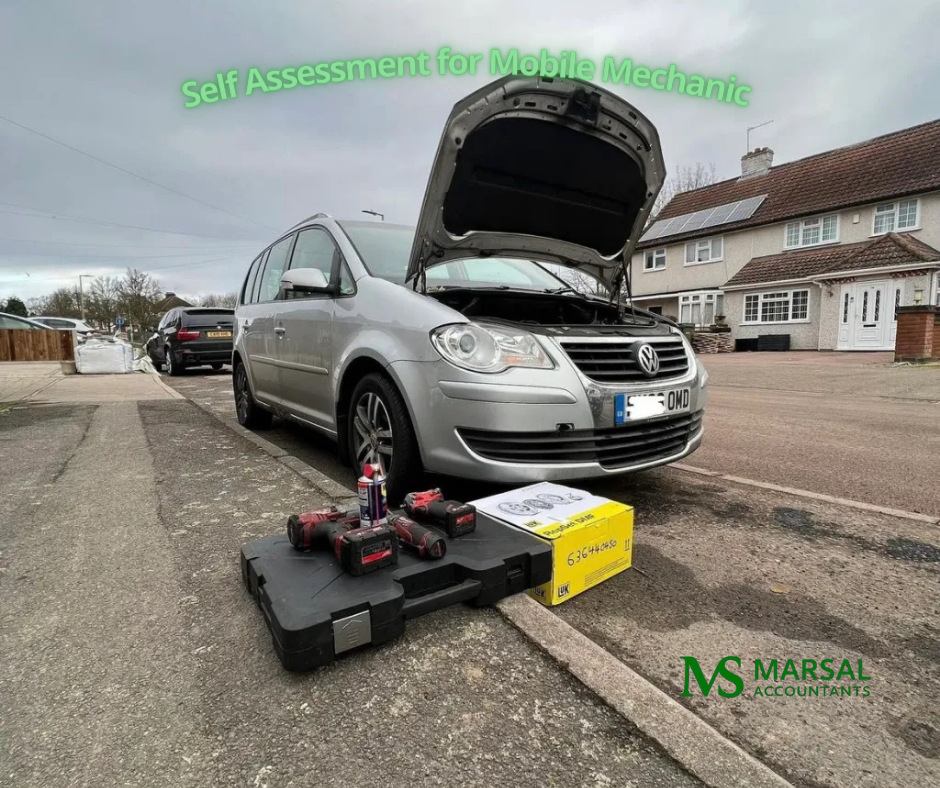
Self-Assessment Tax Guide for Mobile Mechanics by Marsal Accountants
Running your own mobile mechanic business brings freedom, but also the responsibility of managing your taxes. Keeping on top of income, expenses, and your Self Assessment can feel like a full-time job on its own. At Marsal Accountants in Paisley, serving Glasgow and Central Scotland, we specialise in helping tradespeople. We ensure you claim every allowable expense, file accurately, and keep more of your hard-earned money.
This guide walks you through the key records you need, common claims for mechanics, and how to stay compliant with HMRC.
Self Assessment for the Mobile Mechanic
As a self-employed mechanic, HMRC requires you to report your annual business income and expenses through a Self Assessment tax return. This determines your final tax and National Insurance bill for the year.
Why Getting It Right Matters
Filing an accurate and timely return is crucial to:
- Avoid automatic penalties for late filing and payment
- Prevent interest charges building up on unpaid tax
- Ensure you claim back everything you’re entitled to, legally reducing your bill
- Keep your financial records straight for business planning
Essential Records for Your Mechanic Business
Tracking Your Income
- Invoices issued to all customers
- Records of cash and card payments received
- Payments from any garage or subcontract work
- Any income from selling parts or used vehicles
Allowable Expenses You Can Claim
- Tools & Equipment: Spanners, diagnostic scanners, tool chests, jack stands, compressor
- Parts & Consumables: Oil, filters, brakes, bulbs, fluids purchased for customer jobs
- Vehicle Running Costs: Fuel, insurance, road tax, servicing, repairs for your work van (apportioned for business use)
- Business Use of Your Van: You can claim a simplified mileage allowance (45p/mile for first 10,000 miles) instead of actual costs
- Protective Clothing: Overalls, steel-toe boots, gloves
- Business Costs: Public liability insurance, trade membership fees, mobile phone (business portion), accountancy fees
- Workspace: Costs for your home office admin or storage for tools/parts
- Training: Courses to update skills (e.g., on new electric vehicle systems)
The Filing Process: Step-by-Step
- Register with HMRC as self-employed if you’re just starting out.
- Keep Records diligently throughout the tax year (6 April to 5 April).
- Complete Your Return using the SA100 form and the self-employed pages (SA103), declaring all income and deducting all allowable expenses.
- Pay What You Owe by the 31 January deadline.
Common Pitfalls for Mobile Mechanics
- Forgetting ‘Cash-in-Hand’ Jobs: All income must be declared.
- Mixing Personal & Business Spending: Use a separate business bank account.
- Overlooking Small Tools & Consumables: Every socket, litre of oil, and can of brake cleaner adds up.
- Misclaiming Vehicle Costs: Be clear on claiming actual costs vs. simplified mileage.
- Missing the Deadline: 31 January for online filing and payment. Mark it in your calendar.
Focus on Your Tools, We’ll Handle the Numbers
For mobile mechanics across Paisley, Glasgow, and Central Scotland, our tailored accounting support starts from £16.75 per month.
This includes your full Self Assessment service, annual accounts preparation, and ongoing advice to keep your business running smoothly.
How Marsal Accountants Supports Your Business
- We identify every possible expense claim specific to your trade.
- We handle the form-filling and submission, giving you complete peace of mind.
- We provide clear advice in English, Urdu, Punjabi, and Hindi.
- We help you plan for future tax bills, so there are no surprises.
Your Questions, Answered
Q: I work for myself fixing cars in people’s driveways. Do I need to do a tax return?
A: Yes. If you are self-employed and your annual income is over £1,000 (the Trading Allowance), you are legally required to register for Self Assessment and file a return.
Q: Can I claim for my van?
A: Absolutely. You can claim either the actual running costs (fuel, repairs, insurance apportioned for business use) or use HMRC’s simplified 45p per mile allowance. We can advise which method is better for you.
Q: I bought a new diagnostic scanner this year. Can I claim it?
A: Yes. This is a capital allowance claim for equipment. We’ll ensure it’s included correctly to reduce your taxable profit.
Q: What’s the biggest benefit of using an accountant?
A: Time, stress, and money. We save you the hours of admin, ensure it’s done right to avoid penalties, and our expertise in claiming expenses typically saves you more than our fee.
